
24/7 Emergency Response · All of California
Equipment Recovery & Limited Access Cleanup in California
When heavy equipment becomes stuck in unstable terrain or difficult-to-access areas, fast action is critical.
Delays can increase downtime, damage equipment, and create environmental risks if fuel, hydraulic fluid, or other contaminants are released.
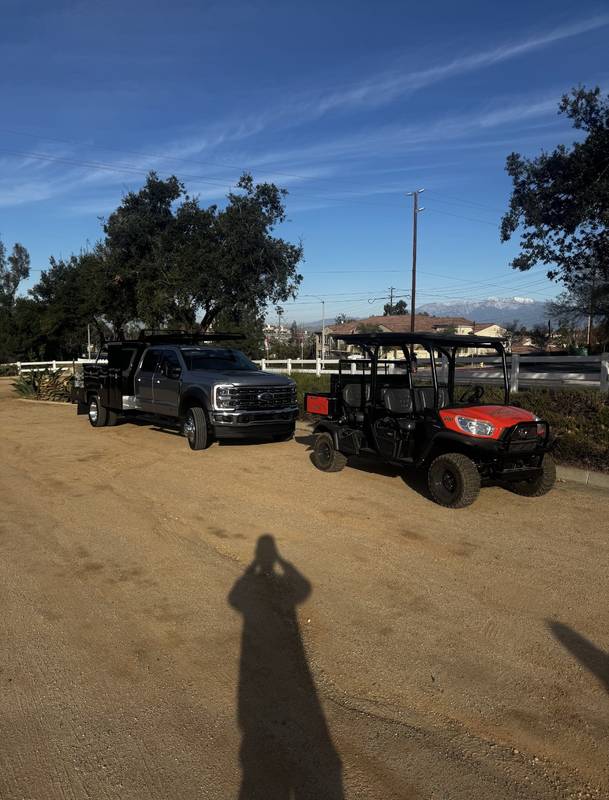
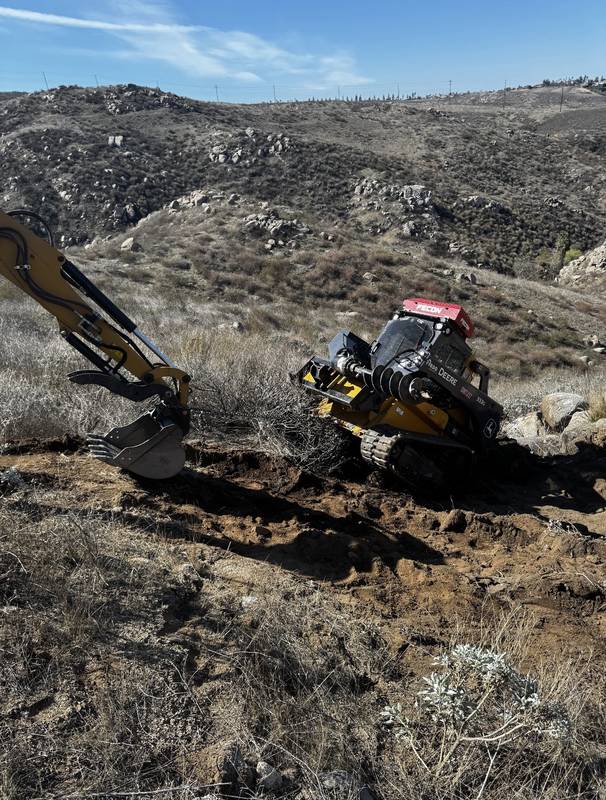
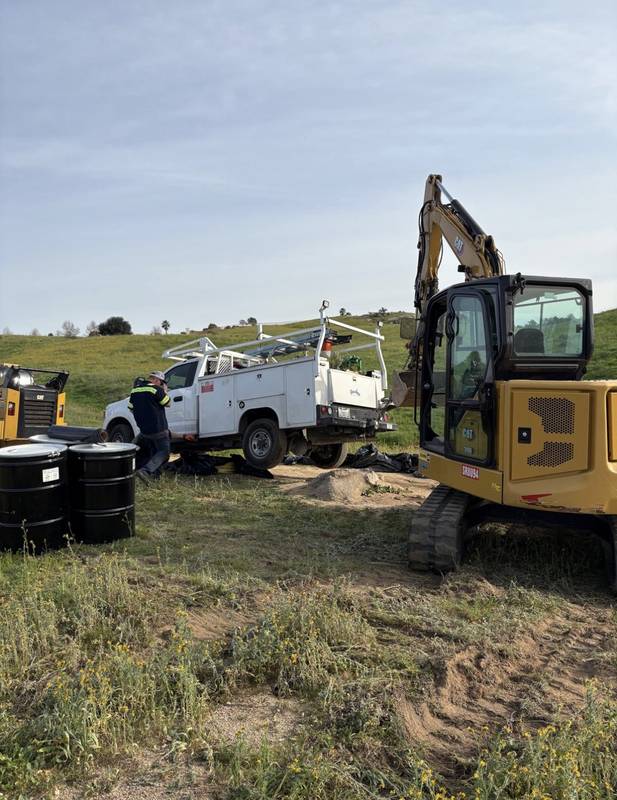
SpillSafe Environmental provides professional equipment recovery and environmental cleanup services for challenging locations: excavators and loaders, service trucks and utility vehicles, construction and grading equipment, and vehicles in remote or restricted-access spots.
Where a recovery involves leaks, spills, or soil contamination, the cleanup happens as part of the same response, so the site is left stable and compliant rather than waiting on a second contractor.
What We Handle
- Excavators and loaders
- Service trucks and utility vehicles
- Construction and grading equipment
- Vehicles in remote or restricted-access locations
- Equipment involved in leaks, spills, or soil contamination
How a Call Unfolds
The call comes from a superintendent, a fleet or equipment manager, a utility crew lead, or a tow operator who has looked at the job and decided it is not a standard hook. An excavator has gone through the crust of a wet basin, a water truck has slid off a dirt access road, a loader is nose-down in a wash, or a service truck is somewhere a wrecker cannot reach. We ask what the machine is and roughly what it weighs, how it is sitting, what the ground is, how far the nearest hard surface is, and whether anything is leaking.
On site the crew walks the approach before bringing anything in, since a second machine stuck beside the first is the classic way these jobs go wrong. Mats, anchor points, or a stable machine positioned on firm ground provide the pull. If fuel or hydraulic fluid is leaking, containment goes down and the fluid is recovered before the machine moves, because a pull can open a damaged line further. The recovery itself is slow and controlled, with the pull direction and rigging chosen to avoid damaging the machine or the ground more than the situation already has.
Once the equipment is on firm ground, the crew addresses what is left behind: fluid on the surface, saturated soil where the machine sat, ruts full of hydraulic oil. That soil is dug and staged, the site is restored as far as the terrain allows, and the customer gets photographs and the disposal paperwork. The machine goes back to the owner or onto a lowboy, and the file reflects both the recovery and the cleanup.
On Scene
A recovery brings a response truck with rigging, mats, containment, absorbent, and pumps, and, depending on the job, an excavator or another machine capable of the pull, a winch truck, or a heavy-duty wrecker working with us. The people present are usually the equipment owner or their superintendent, sometimes the rental company's field representative, and the tow operator if one was called first. On public land or in a flood control channel a district or agency inspector may attend, and if the machine is in or near a waterway the environmental side of the job becomes the priority. The crew coordinates the sequence with the owner so the machine is not moved until the fluids are stable and everyone agrees on the pull.
Documentation You Receive
The customer receives a report describing the equipment, how it was found, the recovery method, and photographs before, during, and after. Where fluids were released, the report notes the product and approximate volume, the containment used, and the soil removed. Recovered fluids, absorbent, and impacted soil are characterized and profiled to a permitted facility, and leave under a manifest or bill of lading with the signed copies following. For a rental machine this is what the rental company's damage claim needs; for an owner it is what the insurance carrier and, if the site is regulated, the agency will ask for.
Need equipment recovery now?
Available 24/7, including limited-access sites standard recovery equipment cannot reach.
Common Questions
Why not just call a heavy tow company?
For a machine on pavement, a heavy wrecker is often the right call. Off-road, in mud, in a channel, or on a slope, the wrecker cannot get close enough or cannot get purchase, and a recovery that ignores the fluids leaves a spill behind. We handle both parts, and we work alongside wrecker operators when the job calls for their equipment too.
Will the recovery damage my machine further?
The pull points, direction, and speed are chosen to avoid it, and the crew will explain the plan before committing. Some situations, such as a machine on its side, involve a judgment call between a slower, gentler recovery and the risk of leaving it where it is. You are part of that conversation.
The machine is in a flood control channel or near a creek. Does that change things?
Yes. Any leak becomes a discharge to water, the agency that owns the channel will want to be involved, and the recovery is planned to keep fluids out of the flow. Tell us on the call so containment and the right notifications happen first.
How soon can you get to a remote site?
We dispatch around the clock and the drive time depends on where you are relative to our Mentone yard. What slows a remote recovery is usually access, not distance: a locked gate, a road that will not carry a truck, or a site nobody can describe precisely. Send a map pin and a gate contact when you call.